Tuesday, May 18, 2010

exiting MoMA


Last Friday I made a trip to the Museum of Modern Art to see the William Kentridge exhibit Five Themes. I would almost say that it is a pity that the exhibit coincided with Marina Abramović, the Artist is Present, but that is like saying that melted butter on warm, home-made bread is almost too delicious. Both shows work as documents of prolific and powerful art making careers. The bonus round was the Henri Cartier-Bresson exhibit, and I didn’t even attempt the Picasso. Kentridge has closed, but with Abramović, Cartier-Bresson, and Picasso, there is an abundance of riches at MoMA right now.

I only spent a short time with Abramović. I want to return and devote my full attention to this incredibly dense exhibit. While I would like to sit with the artist, I don’t share the burning need for catharsis or enlightenment that some museum goers appear to seek.

What is a pity is much of the commentary floating around the interweb right now regarding the Abramović show. Most of it deals with issues irrelevant to the work. Some are going gaga over the means by which Ms. Abramović is urinating under that supposedly designed-by-Prada gown. Then there are warnings about the naked performers. There are the Who’s Who rosters of celebrities showing up to sit with Ms. Abramović. Finally there is the proposal that Lady Gaga’s attendance at the retrospective supports the elevation of her status to that of performance artist.

The depth and consequence of Abramović’ opus far exceeds any of these trite and pointless discussions. However, in the spirit of my lower self, I offer the following thoughts:


It doesn’t mater how she is peeing, but why don’t you just ask her? No one said you couldn’t.

Some noteworthy bloggers would be well served to follow her lead and wear Prada. (you know who you are)

Celebrities get to go to museums too.

Lady Gaga is a pop star. I like good shoes, but it doesn’t make me a cobbler.

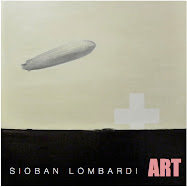
If you are so strapped for a glimpse of naked people, you can still view them in National Geographic. Don’t embarrass yourself in a museum. Better yet, follow the moving billboard parked outside the Museum. It’s pictured above.

Sunday, May 16, 2010

find your tribe


A visiting critic recently addressed the difficult position the visual artist is in. The artist pours the internal and intensely personal into a work then puts that work on public view. The artist knows full well, that their inner life is now not only exposed, but open to criticism. Muddling through the decisions that eventually get a work up on a wall can be daunting. Ultimately, the decisions made in the studio are made alone, but any artist will benefit from the counsel of a close circle of confidants that really know you, and that are engaged in the same endeavor. My advice? Find your Tribe.

It’s beneficial if the members of your tribe work in a like medium. Every material possesses a unique set of qualities and problems.  Understanding these cuts down on demands that cannot be achieved within that particular medium. In addition, the members of your tribe should be as good or better than you. This raises your personal bar sand engenders better work.

It’s helpful if your tribe is made of friends and confidants. You establish a mutual trust. Critics too, put themselves in a vulnerable place. A trusted confidant is more likely to offer substantive criticism when there is no fear of reprisal. They know you, your concerns, and what you are attempting to accomplish.

Your Tribe should take you somewhat seriously. I amplify somewhat. You need some one to let the hot air out of your high and mighty balloon when it becomes too inflated.

Inevitably your tribe cracks the whip, breaks the rules, and rubs your temples. They are your thicker skin. I am grateful to have met the handful of painters that I think of as my Tribe. Thanks for the push and the pull. Now, let’s go out in the world and paint.

Wednesday, May 5, 2010

birthday


green-eyed creature lingering somewhere in every thought

the prescient muse

intellectual: guitar quartets
empathetic: angel valley
but permanent rock

towel-clad tirade, bathed in the light of television’s morning news  -
armed with waving tooth brush

mediating wire gray curmudgeon and nine year old boy

love and sex for a long time, again and still
oh that nice neck

and the secret language

51 = birthday = today = love = always

Monday, May 3, 2010

brownian motion


Hallway, 2010
Mamma Andersson
© David Zwirner

When painting is effective, it can stimulate or suppress the senses and simplify or complicate observation; sometimes it does both at the same time. Such is the case with Who is Sleeping on my Pillow, currently on view at David Zwirner in Chelsea. The conjoined exhibition of Mamma Andersson and Jockum Nordström offers works steeped in the real and imagined traditions and experiences of their native Sweden.

Andersson’s work frequently combines domestic interiors with warped perspectives that alter the viewer’s perception of the inhabitants present. The addition of murky black shapes, perhaps an interpretation of fog on old photographs, adds to the strangeness of these scenes. Here, in paintings such as Unitlted, 2009, the interiors are clearly inhabited, though the occupants are absent. The space implies the stllness left on Monday morning after everyone has left for work. This sensation is amplified by the lack of sound these paintings produce. They are utterly vacuum-like. Dead End, 2010, also signals recent departure.

In contrast, Norström’s two-dimensional works are fully populated with a variety of characters. The painted paper scenes run rampant with cutouts of historic and contemporary characters at once violent and comical, primitive and gentrified. Works such as Groaning, 2010, suggest a world where Swedish Folk Art and the naïve work of American painter Henry Darger coexist.
It is Nordström’s sculptures that suggest absence. Lasarett, 2009, is masterfully conceived in what appears to be repurposed cardboard. The structure conjures the abandoned housing project, ready for demolition.

Currently, there are a lot of painting shows in Chelsea and this is one of the best. For those not suffering from aesthetic A.D.D., Who is Sleeping on my Pillow, effectively silences the all to frequent requirement of spectacle, circuit, identity and signage. The show remains open through June 12.

Tuesday, April 20, 2010

Looking for Angel Valley


Last fall, I published a piece (see “As Seen on Oprah”, October 2009) on the events that led to the conception of my Thesis work. Angel Valley is the name of a retreat center in Sedona, Arizona. There, in October 2009, three people died in a makeshift sweat lodge constructed for a self-help empowerment workshop. In addition to the deaths, a number of participants were critically injured. The cost to participate in the workshop was $10,000 per individual. A one-time telecommunications-marketing manager was the workshop’s creator and facilitator. He has been indicted on three counts of manslaughter and is preparing for trial in Arizona.

This body of work references my own examination of manufactured, misplaced and inadequate constructs. The constructs are often the byproduct of the search for utopia that in fact, cannot be assembled in the physical or material world. Within my work, time, recollection and longing are collapsed, illuminating the irrationality of invented utopias and locating the site of physical presence in time and space.

Tuesday, April 6, 2010

necessary content


During the Easter season one is inundated with eggs; candy, colored and purely decorative. Regardless of their nutritional, symbolic, seasonal or commercial importance, eggs are in fact, remarkable.

Perfectly designed for their function, their shape allows them to roll easily in the nest without falling out. The calcium carbonate shell is strong enough to protect the cargo, yet so fragile that a young chick can break through, emerging exhausted, but alive. Duck eggs have oily shells, rendering them waterproof. There is nothing unnecessary about the components and structure of an egg.

Last week I met a well-known art critic. Someone in our group inquired as to what she believed made certain works of art successful. She responded, and I paraphrase, that effective art contained only that which was necessary to it. It is unhindered by extraneous components. This does not mean minimalistic, for she went on to clarify that it could have a whole lot of stuff, but all of the stuff had to be necessary to the work, for it to truly succeed.

I recently completed five large oils, some of which I am going to include in my Thesis Show. I began a sixth painting, and when I completed the monochromatic under-painting, it appeared that the work might not require the conscientious, pigmented layers of glaze in which I usually indulge. It might not need color at all. The idea of an achromatic painting interested me. Granted, I mix my own black, so it is never truly black, but color is one of the natural instincts on which I have come to rely. What I had been doing was getting comfortable and it was time to break things.

My challenge is to make the paintings strong enough so that black, white, and perhaps the addition of one other color remain sufficient visual components. I have completed this first black and white painting and am pleased. 

Today and for the next three weeks, known critics and curators will see this work and publicly comment on it. Like the egg, I hope the painting and I attend these sessions, outfitted only with that which is necessary and sufficient.
After my exhibit opens on April 19th I will post the works.

Wednesday, March 31, 2010

Emily Lindskoog, Left Hand - Right Hand


Spread, (c) Emily Lindskoog, 2010

In her recent article, It’s Not Dry Yet, the ever-erudite New York Times Art Critic Roberta Smith presents yet another successful defense against those persistent voices proclaiming the death of painting. Within the article however, there is an even more interesting discussion concerning those that still pit abstract against representational art. Ms. Smith articulates why this is so clearly a ridiculous argument, and why any such argument that grounds itself in privileging one medium or method over another is a rather self-destructive and archaic, if not juvenile, point of view.

Within all of the visual arts, abstraction and representation co-exist. Any three-dimensional entity, reduced to a two-dimensional picture plane is abstracted. In Minimalism both are stripped to their most essential form; even those ultimate thinkers Art and Language, have relied on description to convey the most abstract theories about the practice, status and nature of being and artist and making art. Indeed, the infinite means in which text, sign and context can be manipulated, perceived and understood indicates almost ultimate abstraction and pure representation.

Artist Emily Lindskoog, who’s MFA Thesis exhibition titled Left Hand Right Hand, is currently on view at Pratt Institute’s Steuben West Gallery, is firmly grounded within both the abstract and representational realms. The works, monumental drawings on paper, are pure and perfect figurative gestures, demonstrating through drawing media and saliva, the extent to which her body can reach, coordinate, spew and project. One may perceive an abstract drawing, but actually receives the representation of Lindskoog’s physical limits. In addition, the lineage is also there, her media culled from early history cave paintings. Despite what may be perceived as a brutish method of mark-making, Lindskoog’s spitting, spraying and synchronizing of right hand with left, produces elegant and powerful works. The exhibition will remain open through Friday, April 2, 2010.

In a week that marks solemn observations by two of the world’s prominent faiths, Left Hand Right Hand confirms my belief - blessed be painting in all its permutations.